
Reference · Paper
Paper bag sizes and GSM, explained.
Two numbers decide most of what a paper bag costs and whether it does its job: the weight of the sheet, and the three dimensions of the finished bag. Both are quoted loosely across this trade, which is how buyers end up comparing things that were never the same. This is the general picture, not our own spec sheet.
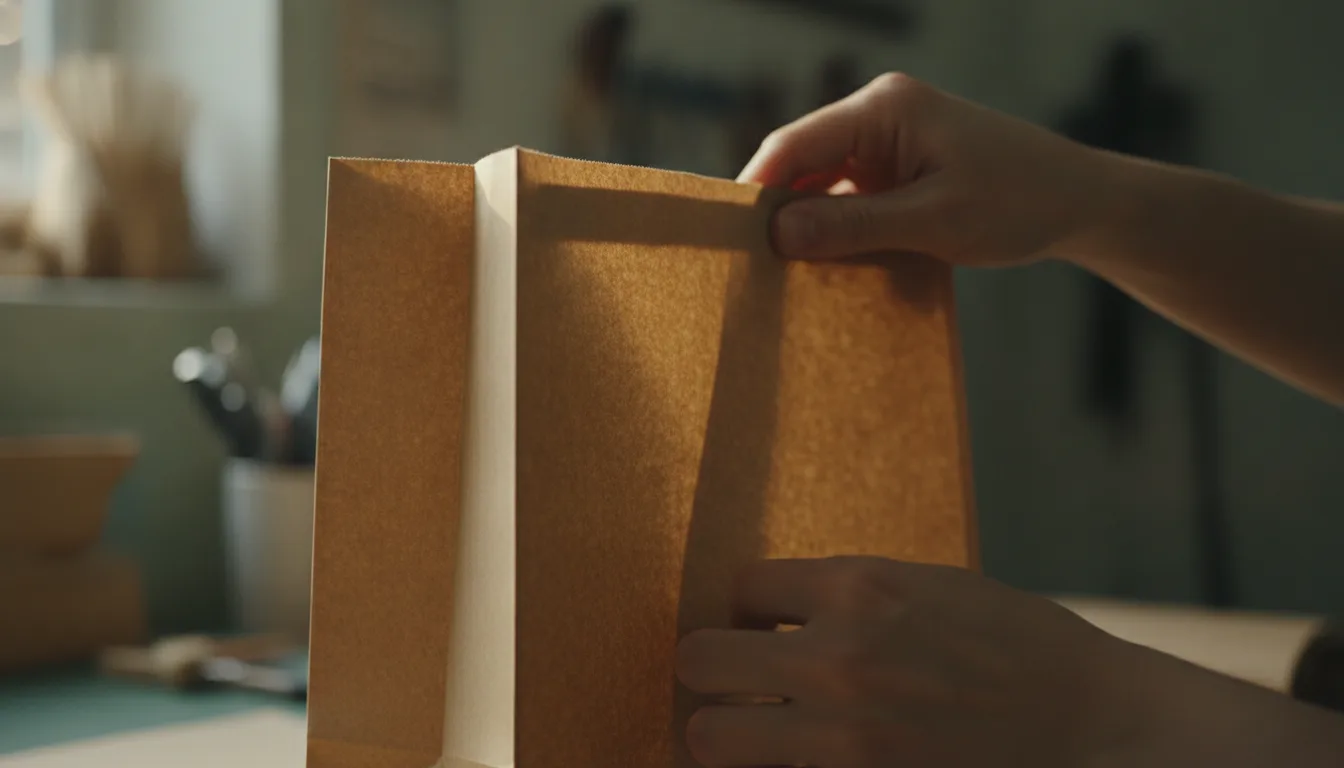
Measuring
Width, height, depth. In that order.
Depth is the one people leave out, and it is the one that changes the price, because it changes how much sheet the bag consumes. A brief with two numbers instead of three is the most common reason three quotes come back incomparable.
Substance
What GSM actually measures.
Grams per square metre: the weight of one square metre of the paper the bag is cut from. It describes substance rather than thickness, though on a single paper type the two track together closely enough to reason with. Because GSM multiplies with the area of sheet a bag uses, it is the largest single input into cost, and the first thing any quote should state. The same three letters are used for cotton cloth, where they describe fabric weight and the useful range is a different one entirely.
-
60 – 100 GSM
Light food and bakery bags
Bread, pastries, a single boxed sweet. Cheap to make and correct for the job. Put a grocery load in one and it will tear at the handle.
-
100 – 150 GSM
Everyday grocery and produce
The working weight of the trade. Flat-bottom kraft bags that stand on their own and carry vegetables, fruit and a full basket home.
-
150 – 200 GSM
Retail carriers
Clothing, footwear, boxed goods. Heavy enough to hold its shape on a shelf and in a photograph, which is usually why it is chosen.
-
200 – 250 GSM
Premium and laminated
Where lamination, foil and spot UV live. The coating adds stiffness of its own, so the paper underneath does not always need to be the heaviest option.
-
250 – 350 GSM
Rigid, gift and boutique
Small-format jewellery and gift bags, and anything meant to be kept. Past this point you are usually specifying board rather than paper.
Each bar above is drawn at a thickness in proportion to its band, so the column reads roughly like the cut edge of a stack. Treat the ranges as market convention rather than rule: lamination, the handle type and the build all shift what a given weight can carry.
Choosing
Heavier is not automatically better.
Match the load, then stop
Past the weight your goods actually need, extra GSM buys stiffness and cost rather than usable strength. An over-specified bag also folds badly and ships worse, so you pay twice.
Construction beats substance
A reinforced turn-top edge and a properly anchored handle will carry more than an extra 50 GSM. Most failures happen at the handle, not in the middle of the sheet.
Lamination changes the maths
A laminated 170 GSM bag behaves like a heavier unlaminated one. If you are laminating anyway, you can often specify down a band and keep the same feel in the hand.
Under-specifying is the costly error
A bag that tears at the counter is remembered by the customer, not by the buyer who saved a rupee on it. When in doubt between two bands, take the heavier one.
Size reference
Common formats, in both units.
Suppliers in this market quote in inches as often as in centimetres, and drawings routinely arrive in the other one. One inch is 2.54 cm. These are the formats brands ask us for most often, shown both ways as a starting point. Every bag we make is cut to the spec you give us.
| Format | Centimetres | Inches, approx. | Common use |
|---|---|---|---|
| Grocery, small | 18 × 30 × 12 | 7 × 12 × 4.5 | Produce, takeaway, daily grocery |
| Grocery, medium | 24 × 33 × 15 | 9.5 × 13 × 6 | Supermarket, vegetables, fruit |
| Grocery, large | 30 × 43 × 18 | 12 × 17 × 7 | Bulk grocery and produce |
| Small / gift | 16 × 22 × 8 | 6.5 × 8.5 × 3 | Jewellery, cosmetics, gifting |
| Boutique | 18 × 24 × 10 | 7 × 9.5 × 4 | Accessories, beauty |
| Medium retail | 25 × 32 × 11 | 10 × 12.5 × 4.5 | Apparel, footwear, retail carry |
| Large | 32 × 42 × 12 | 12.5 × 16.5 × 4.5 | Apparel, hampers, gifting |
| Wine / bottle | 12 × 36 × 10 | 4.5 × 14 × 4 | Bottles, specialty food and drink |
Writing the brief
Five fields make three quotes comparable.
If you do not know the GSM, say what goes in the bag and how heavy it is. Recommending the weight is part of the job, and it is a better conversation than guessing at a number to put in a form.
Keep exploring
Related.
Questions
Sizes and GSM: FAQs.
What does GSM mean on a paper bag?
Grams per square metre: the weight of one square metre of the paper the bag is made from. It is a measure of substance, not of thickness, though the two usually track together. It is the single biggest input into both what a bag costs and whether it survives the walk home.
What GSM should a paper bag be?
For light food and bakery bags, roughly 60 to 100. For everyday grocery and produce carriers, roughly 100 to 150. For retail carriers holding clothing or boxed goods, roughly 150 to 200. For premium, laminated or gift bags, 200 and above. These are market conventions rather than rules, and the right answer depends on the weight, the shape and whether the bag is laminated.
How is a paper bag measured?
Width by height by depth, in that order. Width is the front face left to right, height is the front face top to bottom excluding the handle, and depth is the gusset, meaning how far the bag opens out at the base. Depth is the one most often left out of a brief, and leaving it out is the most common reason two quotes are not comparable.
Is paper bag size given in inches or centimetres?
Both are in daily use in India, and suppliers frequently quote in inches while drawings arrive in centimetres. One inch is 2.54 cm. Always state which unit you mean, and state all three figures, because a bag described only as “10 by 13” could be either and could be missing its depth.
Does a higher GSM always mean a better bag?
No. Beyond the weight the load actually needs, extra GSM adds cost and stiffness without adding usable strength, and a bag that is too rigid folds badly and ships worse. Construction matters as much as substance: a reinforced turn-top edge and a properly attached handle will carry more than an extra 50 GSM will.
What is the HSN code for paper bags?
Paper bags fall under chapter 48 of the HSN schedule, which covers paper, paperboard and articles made from them. The precise eight-digit code and the tax rate depend on the bag's construction and change from time to time, so confirm the current figures with your accountant rather than relying on any supplier's website, including ours.
Proof in every fold
Tell us the load. We will recommend the weight.
Send what goes in the bag and roughly how heavy it is. We reply from the Bangalore workshop, usually within one business day, and the paper is approved on a free sample sheet before anything is produced.